Cancer Survivors & The Healing Power of Movement


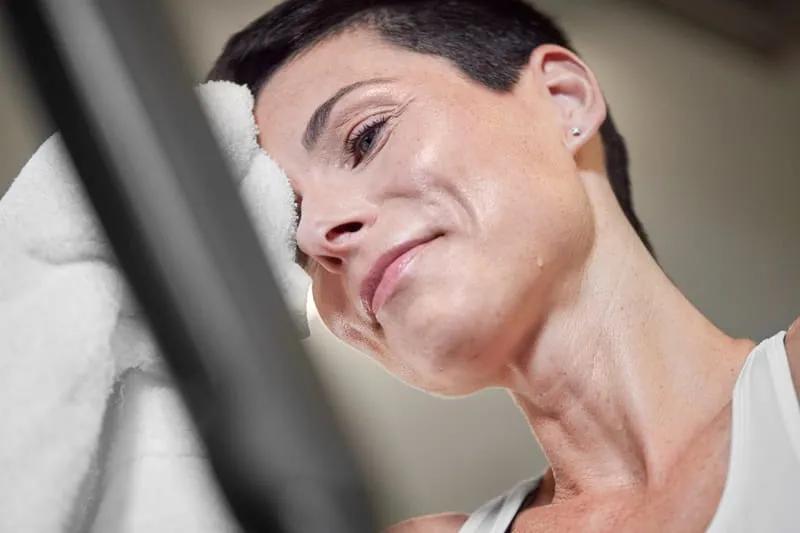
You probably already know that exercise reduces cancer risk, but did you know that healthy movement can have a positive impact on those undergoing treatment and those recovering from cancer? As the leading global cause of death, with a lifetime risk exceeding 40%, it’s likely that there are cancer survivors in your fitness facility. By understanding the challenges faced by individuals diagnosed with cancer, you can provide crucial empathetic support during their journey back to wellness.
Mental & Physical Challenges
Understandably, a cancer diagnosis is emotionally distressing. Individuals grapple with feeling a loss of control over their bodies and their lives. In fact, newly diagnosed individuals often report increased fear, anxiety, sadness, depression and loneliness. It’s such a profoundly devastating experience that friends and family who provide care report experiencing mental health declines themselves during the treatment process. Some individuals will also self-isolate by choosing not to disclose their diagnosis, even to their families. This is especially true for men, who often prioritize control and self-reliance as part of their masculinity. Worst yet, all these mental health challenges are in addition to the litany of physical struggles patients endure due to surgery, radiation and chemotherapy.
Getting Started
While exercise may be restricted in some situations, particularly after surgical procedures and in those with severe heart disease, experts agree that inactivity should be avoided for the majority of cancer patients during treatment and recovery. Yet how do you convince people who have already been through so much to take on the challenge of exercising again? Start by reminding them that research confirms that exercise benefits mental and physical resilience in cancer patients. Let them know that research also confirms better surgical outcomes in patients who prioritize exercise.
Specific Advantages Of Staying Active
Studies in cancer patients show that physical activity significantly benefits their sleep and bone health. Furthermore, there is strong evidence that regular exercise minimizes their fatigue, anxiety and depression, improving their quality of life.
Workout Duration
While exercise recommendations for cancer patients are for 30 to 60 minutes of moderate-intensity activity per day, immune benefits are also realized in shorter bouts of exercise. For example, in lymphoma and breast cancer patients, a mere 10 minutes of indoor cycling increased circulating immune cells, including those that fight cancer. Daily workouts offer the best immune responses, ensuring that the increase in circulating immune cells is sustained for multiple days. This supports other studies in cancer patients that show regular exercise offers the best immune response against cancer.
Hope & Healing
Individuals fighting cancer need support that addresses both their physical and mental health challenges. Fitness professionals like you can be a vital part of their support system by offering a mix of empathy and educational insight. By helping them understand the benefits of exercise, you can make a difference in the lives of those battling cancer and in the lives of their caregivers, fostering hope and resilience for everyone.
CERTIFICATION OPTIONS
The American College of Sports Medicine (ACSM) offers a Cancer Exercise Specialist Course
The CanRehab Cancer Confidence Course in the United Kingdom
The Cancer Exercise Training Institute (CETI) offers a Cancer Exercise Specialist Course
Thrive Health offers a Cancer & Exercise Certification

Karlie Intlekofer, PhD, CNC, CPT
References
Avancini et al. Exercise prehabilitation in lung cancer: Getting stronger to recover faster. Eur J Surg Oncol 2021; 47(8): 1847-55. https://doi.org/10.1016/j.ejso.2021.03.231
Brown & Ligibel. The role of physical activity in oncology care. JNCI Monographs 2017; 52: 41-2. https://doi.org/10.1093/jncimonographs/lgx017
Dethlefsen et al. Every exercise bout matters: Linking systemic exercise responses to breast cancer control. Breast Cancer Res Treat 2017; 162: 399-408. https://doi.org/10.1007/s10549-017-4129-4
George et al. Objectively measured sedentary time is related to quality of life among cancer survivors. PLoS ONE 2014; 9(2): e87937. https://doi.org/10.1371/journal.pone.0087937
Halpern et al. Impact of caregiver activities and social supports on multidimensional caregiver burden: Analyses from nationally-representative surveys of cancer patients and their caregivers. Quality of Life Research 2017; 26: 1587-95. https://doi.org/10.1007/s11136-017-1505-9
Knapp et al. Identity threat and stigma in cancer patients. Health Psychology Open 2014; 1(1). https://doi.org/10.1177/2055102914552281
Koivula et al. Acute exercise mobilizes CD8+ cytotoxic T cells and NK cells in lymphoma patients. Front Physiol 2023; 13: https://doi.org/10.3389/fphys.2022.1078512
Koivula et al. The effect of acute exercise on circulating immune cells in newly diagnosed breast cancer patients. Sci Rep 2023; 13: 6561. https://doi.org/10.1038/s41598-023-33432-4
Park et al. Understanding the public’s emotions about cancer: Analysis of social media data. Int J Environ Res Public Health 2020; 17(19): 7160. https://doi.org/10.3390/ijerph17197160
Schmitz et al. American College of Sports Medicine roundtable on exercise guidelines for cancer survivors. Med Sci Sports Exerc 2010; 42: 1409-26. https://doi.org/10.1249/MSS.0b013e3181e0c112
Schmitz et al. Exercise is medicine in oncology: Engaging clinicians to help patients move through cancer. CA Cancer J Clin 2019; 69(6): 468-84. https://doi.org/10.3322/caac.21579
Surveillance, Epidemiology, and End Results (SEER) Program (www.seer.cancer.gov) SEER*Stat Database: Populations - Total U.S. (1969-2020) National Cancer Institute, DCCPS, Surveillance Research Program, released January 2022. Accessed 01/02/2024. https://seer.cancer.gov/statfacts/html/all.html

